By: Jeff Brazier, Chief Development Officer

In recent years, private equity and other institutional investors have become increasingly active in the child care sector. That investment has played a meaningful role in helping expand access to care, modernize facilities, and introduce operational efficiencies that can benefit families and educators alike. As the sector continues to evolve, a variety of ownership and investment models now coexist, each bringing its own strengths and trade-offs.
At the same time, families experience child care not as a business model, but as a daily, deeply personal part of their lives. What matters most to them often comes down to the classroom experience, trusted relationships with educators, and the leadership that supports children’s routines, growth, and sense of belonging. How well an ownership model supports those priorities can look different depending on a family’s needs, expectations, and stage of life.
Different investment and ownership structures naturally create different planning horizons and decision-making frameworks. Some models are well-suited to rapid expansion or operational transformation, while others emphasize long-term community presence and consistency. For child care operators, the most important consideration is alignment—ensuring that governance, incentives, and leadership structures reinforce quality, stability, and the values families care about most.

Child care is more than a service; it is an essential community institution. And strong community institutions are built over time, through trust, relationships, and continuity. For many families and educators, there is real value in knowing that the people leading their school are deeply connected to the local community and committed for the long term.
This is where franchising offers a compelling option within the broader child care ecosystem.
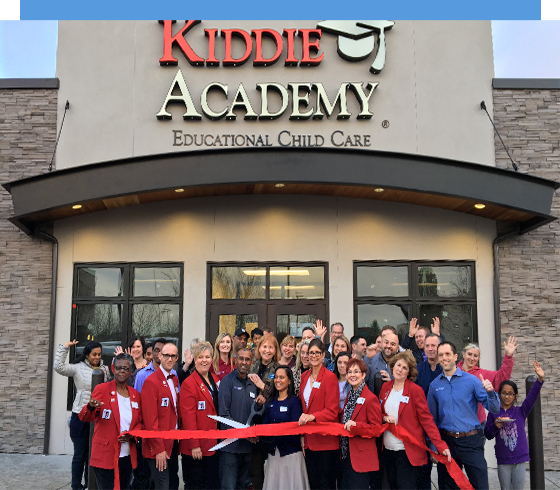
Our Franchise Owners are local business owners who live and work in the communities they serve. They develop personal relationships with families, collaborate with local employers, and invest in their neighborhoods year after year. For many of them, success isn’t defined by short-term milestones, but by sustained trust, strong teams, and positive outcomes for children over time.
At the same time, they are not operating alone. Kiddie Academy provides the curriculum, training, operational support, and quality assurance of a national organization, helping ensure consistency and high standards across our system. This combination—local ownership supported by national expertise—offers a balance that many families value: the familiarity and accountability of a neighborhood school paired with the resources and stability of an established brand.

It is also a model designed with longevity in mind. While some ownership structures are optimized around specific investment timelines, franchising is well-aligned with long-term stewardship. Many Kiddie Academy Franchise Owners operate their Academies for decades, sometimes involving multiple generations of their own families. That continuity can be especially meaningful for educators seeking stable careers and for families seeking reliable, long-term care arrangements.
Ultimately, the conversation about investment in child care isn’t about choosing sides. It’s about recognizing that different models serve different needs. Families deserve choices that align with what matters most to them—whether that’s scale, convenience, local connection, or long-term stability. Educators deserve supportive environments where development and retention are priorities. Communities deserve partners who understand the lasting importance of early childhood education.
Child care thrives when financial considerations are thoughtfully balanced with quality, consistency, and commitment. Local ownership, supported by national resources, is one approach that reflects those values—and one we are proud to champion at Kiddie Academy. It helps keep child care rooted where it matters most: with children, families, educators, and the communities they call home.